
We previously explored the first two key aspects of experience design: the audience and its participation. Let’s explore the last two aspects: aims of the experiences and its narrative structure.
Aims of the experience
Why do we want to create this experience?
- How do we want the audience to feel before, during and after the experience?
- Having had the experience, what actions do we want the audience to take and how do we want the audience to change its behaviour?
Narrative structure
A good narrative can achieve these aims.
- Whereas a story explains events in terms of causes and effects, a narrative connects these events together to give them coherence: narrative = story + telling.
- Different narratives serve different functions whether conveying instructions or information; evoking reflection or empathy; helping us memorise; sparking creativity; or teaching values.
The narrative structure will affect the emotional journey:
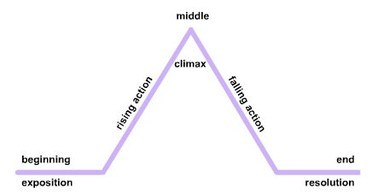
Linear narratives have three main stages and the emotional intensity changes as the narrative moves through them:
- Beginning (past). The main characters are introduced, setting the tone and context. Action starts to rise and tension mounts as a central conflict is introduced.
- Middle (present). A climax is reached when some catalyst forces the characters to endure the conflict.
- End (future). The conflict resolves and the characters are transformed. The action falls and tension lowers.

Non-linear narratives involve events following a similar structure but they are presented in an non-chronological order (think Pulp Fiction).
In circular narratives, the story ends at the same place where it began but the main character returns transformed.
Participation in the narrative can be bound by:
- How open or closed is the experience? We instinctively read stories into everything even when not intended- we fill in the gaps. Audiences participate more when they use their imaginations to create content and draw their own conclusions. What’s left out (open) is as important as what’s told (closed).
- How much of the aims are revealed? Narratives can be transparent or opaque, depending on how much we want to reveal their aims or hide them.
Physical mapping is important to design a space that can represent a narrative structure; for example, each room can tell a different story and the order of visiting each room can reveal a different narrative.
- Look at the floor plan to determine the best way for people to navigate the experience: is there a single journey route or multiple routes? What route do we want the audience to take?
Emotional mapping is equally important:
- What is the initial emotion at the start of the experience and the final emotion at the end? Is the change too big and unrealistic to be met? Or too small so that the experience will disappoint?
- Can we map out how these emotions change as people move through different stages of the experience. Negative feelings can still be good; fear is valuable when designing a scary fairground ride.
- Emotions can be low during the journey. If too low, then people might simply leave the experience prematurely.
Finally, we could use a range of tools to tell the story whether set design, music, smells, actors, props and costumes and technologies.
 Blow Minds