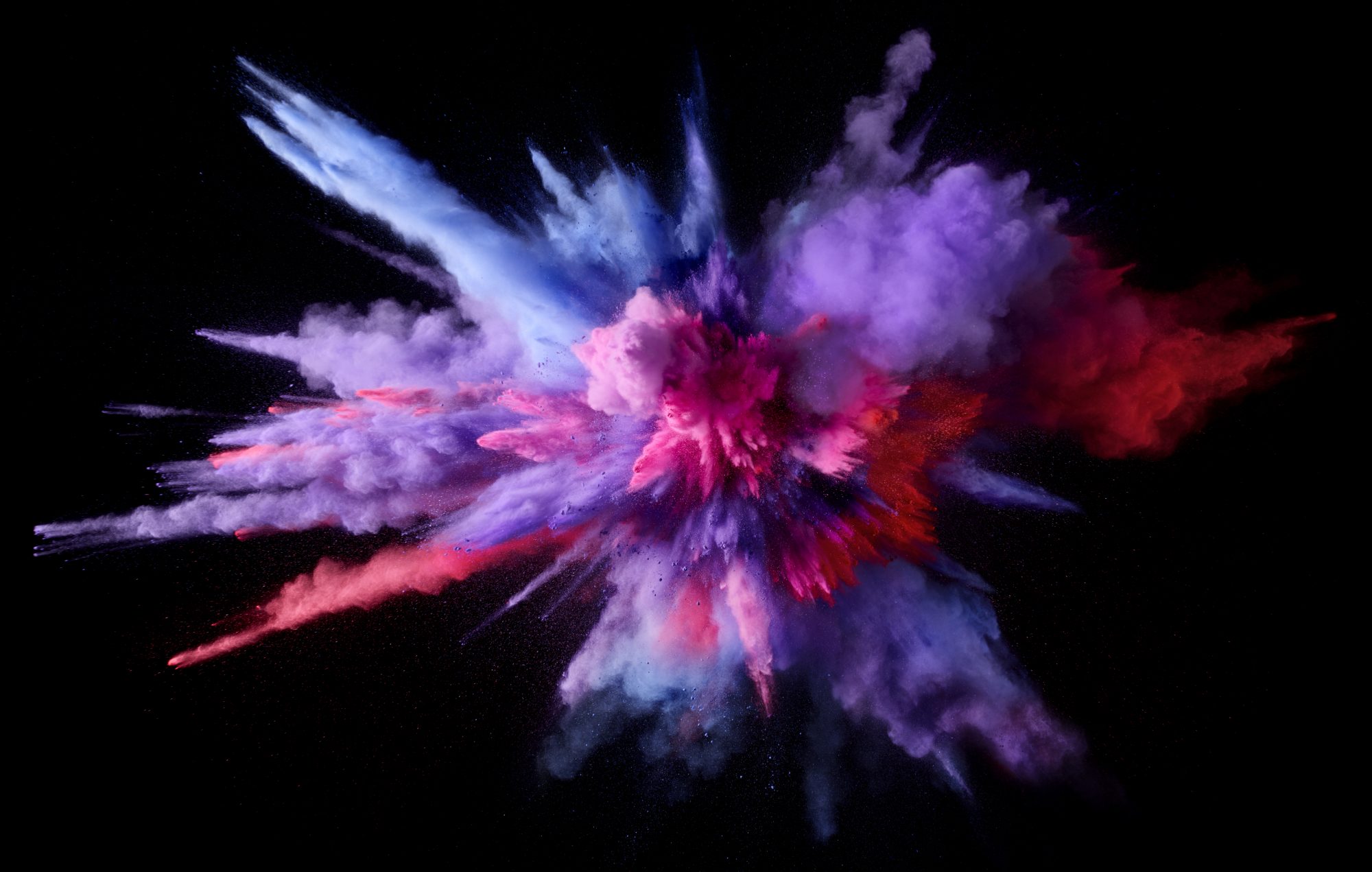
Recently, I’ve been reading Jonathan Weinel’s Inner sound: altered states of consciousness in electronic music and audio-visual media that concerns how to represent Altered States of Consciousness (ASCs) where the contents of experience diverge significantly from our usual waking awareness.
Altered states of consciousness and hallucinatory experiences
ASCs include psychosis where our thoughts and emotions become severely separated, involving delusion, paranoia and even auditory hallucinations where we hear voices. ASCs also include psychedelic experiences involving sensory hallucinations, especially visual ones. Less commonly reported hallucinations are auditory ones, including music, noises and voices, where sounds may appear to echo or distort; appear closer or further away; slowed down or speed up. Synaesthesia is possible where different senses become blurred, such as ‘sound to image’ hallucinations where what we see appears to correspond and move to the sounds or music we can hear. Other emotional effects include euphoria or terror, and even out of body experiences where our sense of self is separated from our bodies. Dreams are fundamentally similar to hallucinations but sensory perceptions are internally generated within the brain rather than via our sense organs. Sensory deprivation can induce hallucinations by closing off external sensory inputs; for example, through isolation tanks. Meditation can suspend the busyness of thoughts to access a deeper level of awareness. Trance states that often involve sensory overload can make us lose our sense of self or even feel possessed. Hypnosis can have a hallucinatory feel where our subjective experience is changed involuntarily due to suggestions.
Representing altered states of consciousness
Visual media have been used to represent ASCs. Think of the psychedelic scenes in counterculture films, such as Easy Rider and Fear and Loathing. Think of psychedelic projections and 60s light shows- the sensory overload of Andy Warhol’s Exploding Plastic Inevitable or London’s UFO club and its projections of oil blobs expanding, contracting and dividing. Post 60s, VJ performances emerged as ‘sound to image’ technology developed so that visuals could more precisely link to the properties of audio signals. for exmaple, the Light synth programs of Jeff Minter whose software was later used to create live visuals for The Shamen and The Orb. Low cost 3D animation tools helped design the visual aspects of rave culture in the 80s and 90s and imagery to represent ASCs. Android Jones’ Samskara is a leading example today. Video games differ to other AV media since users can explore and interact within them. Video games also allow immersion within virtual environments, as well as presence to feel like ‘being there’- VR transports us away to virtual environments while AR keeps us in our current environment.
Simulating altered states of consciousness
The key question posed by Inner Sounds is: could audio and visual (AV) systems induce or simulate ASCs that are indistinguishable from the real thing? Could AV systems induce a hallucinatory experiences as if we had consumed psychedelic drugs?
ASC simulations represent the sensory experience of ASCs within the theatre of consciousness. We have an intuition that we perceive the mind like a theatre where consciousness is like a spotlight that brings certain elements into view at the front of the stage while other elements continue to work unconsciously backstage. The audience of ASC simulations is the homunculus inside the host- the audience is situated in the theatre of consciousness. Interactivity and immersion are key to the AV systems that could simulate ASCs. Different simulations would be possible according to the configurations of Inner sounds’ conceptual framework. Different graphics and sounds recreate the visual and auditory aspects of ASCs. Feedback systems provide interactive interfaces, such as haptic or gestural controllers or biofeedback devices. Immersive technology means the performance space can be transported or situated (AV and projection mapping).
Simulating ASCs would not just be of hedonistic and entertainment value but also therapeutic or even existential value to explore what’s possible at the frontiers of digital culture for representing and transforming conscious experience, namely new forms of communication to perceive the first person, subjective experience of others. Simulating ASCs would pose ethical questions about artists’ responsibilities as shamans to guide us through their artworks.
 Blow Minds